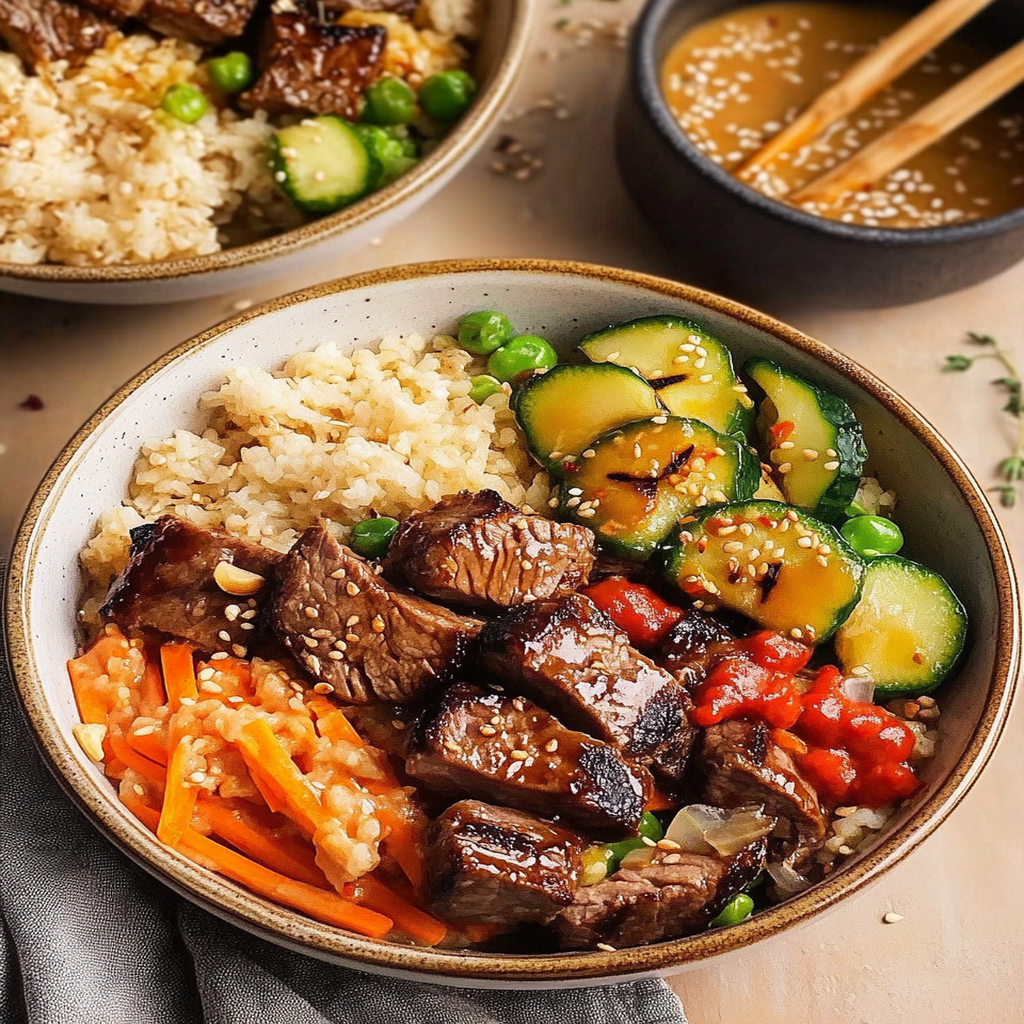
Hibachi Steak Bowls are a delightful dish that brings the flavors of Japanese cuisine right to your kitchen. This recipe is all about simplicity and taste, making it perfect for both busy weeknights and special gatherings. In this article, you will learn how to create these savory bowls that combine tender steak with fresh vegetables and fluffy rice. Not only are they satisfying to eat, but they also allow for customization according to your preferences. You can easily adjust the seasoning or add your favorite toppings to make it uniquely yours. This dish is not just a meal; it’s an experience that captures the essence of hibachi grilling right at home. With just a few ingredients and steps, you’ll have a hearty and nutritious meal on the table in no time. So grab your apron and get ready to impress family and friends with these flavorful Hibachi Steak Bowls!
Why You’ll Love This Hibachi Steak Bowls
- Quick and Easy: Minimal prep time and straightforward steps make this recipe stress-free, even for novice cooks
- Flavorful and Versatile: Enjoy outstanding flavor with ingredients you can easily customize by adding your favorites or adjusting spices
- Perfect for Any Occasion: Ideal for casual gatherings, holiday celebrations, or weeknight dinners
Ingredients for Hibachi Steak Bowls
Here’s what you’ll need to make this delicious dish:
- Steak: Use flank steak or sirloin for best results; these cuts are tender and absorb marinades well
- Vegetables: Bell peppers, zucchini, and onions add color and crunch; feel free to include your favorites
- Cooked Rice: Choose jasmine or brown rice as a hearty base; ensure its cooked before assembling the bowls
- Soy Sauce: Low-sodium soy sauce keeps the dish flavorful without too much salt
For the Sauce:
- Sesame Oil: A little sesame oil adds richness and enhances the overall flavor profile of the dish
The full ingredients list, including measurements, is provided in the recipe card directly below.
How to Make Hibachi Steak Bowls
Follow these simple steps to prepare this delicious dish:
Step 1: Prepare Your Ingredients
Begin by slicing your steak against the grain into thin strips. Chop vegetables like bell peppers and zucchini into bite-sized pieces.
Step 2: Marinate the Steak
In a bowl, combine soy sauce with sesame oil. Add the sliced steak to this mixture and let it marinate for at least 15-30 minutes for deeper flavor.
Step 3: Cook Your Vegetables
Heat a skillet over medium-high heat with a touch of oil. Add chopped vegetables and saut until they are tender yet still crispabout 5-7 minutes.
Step 4: Cook the Steak
In the same skillet after removing vegetables, add marinated steak slices. Cook them until browned on both sidesapproximately 3-5 minutes depending on thickness.
Step 5: Assemble Your Bowls
Start with a scoop of cooked rice at the bottom of each bowl. Layer with sauted vegetables followed by cooked steak slices on top.
Step 6: Serve with Garnish
Transfer to plates and drizzle with additional soy sauce if desired. Top with sesame seeds or green onions for extra flavor.

Tips and Tricks
Here are some helpful tips to ensure the best results for your dish:
- Even Cooking: Make sure all ingredients are cut to similar sizes for consistent cooking times
- Temperature Control: Let ingredients reach room temperature before starting for better results
- Advanced Technique: For enhanced flavor, try marinating the ingredients overnight
How to Serve Hibachi Steak Bowls
This Hibachi Steak Bowls is versatile and pairs wonderfully with:
- Rice or Potatoes: A hearty base that soaks up the delicious sauce.
- Fresh Salad: Adds a crisp and refreshing contrast to the rich flavors of the dish.
- Crusty Bread: Perfect for enjoying every last drop of the flavorful sauce.
Feel free to pair it with your favorite sides for a personalized meal!
Make Ahead and Storage
- Make Ahead: You can prepare the steak marinade a day in advance, allowing the flavors to meld. Slice vegetables and store them in airtight containers in the refrigerator for up to three days before cooking.
- Storing: Store any leftover Hibachi Steak Bowls in an airtight container in the fridge for up to three days. For longer storage, consider freezing components separately; cooked steak can last up to two months in the freezer.
- Reheating: To reheat, warm the steak in a skillet over medium heat for about five minutes until heated through. If reheating rice or potatoes, add a splash of water to prevent drying out and cover with a lid until warmed, usually around five to eight minutes.
Suggestions for Hibachi Steak Bowls
Avoid Overcooking the Steak
Overcooking is one of the most common mistakes when making Hibachi steak bowls. The key to a juicy, flavorful steak lies in cooking it to the right temperature. Aim for medium-rare, which is around 130F to 135F (54C to 57C). Use a meat thermometer to check the internal temperature and remove it from heat when it reaches about 5 degrees below your desired doneness. Letting the steak rest for a few minutes allows the juices to redistribute, ensuring each bite remains tender and juicy. Overcooked steak can ruin the overall experience of your Hibachi steak bowls, so pay close attention during this critical cooking phase.
Skipping the Marinade
A common mistake in crafting delicious Hibachi steak bowls is neglecting to marinate your steak. A good marinade infuses flavor and helps tenderize the meat. Basic marinades often include soy sauce, garlic, ginger, and a touch of sesame oil. Allow your steak to marinate for at least 30 minutes, but ideally a few hours or overnight for maximum flavor penetration. This step enhances the umami taste in your dish and adds depth that elevates your meal from ordinary to extraordinary. Dont overlook this important step if you want to impress with your Hibachi steak bowls.
Not Preparing All Ingredients Ahead
Another pitfall in preparing Hibachi steak bowls is failing to prep all ingredients beforehand. This dish cooks quickly, so having everything ready ensures a smooth cooking process. Chop vegetables like bell peppers, zucchini, and onions in advance, and have sauces on hand before you start grilling. This practice not only makes cooking more efficient but also prevents overcooking of ingredients while you scramble to cut them mid-cook. By being well-prepared, you can focus on achieving that perfect sear on your steak and keep everything fresh and vibrant in your Hibachi steak bowls.
Ignoring Proper Heat Control
Heat control plays a significant role in creating perfect Hibachi steak bowls. Many home cooks make the mistake of using inconsistent heat sources or not allowing their grill or skillet to preheat adequately. You want a high heat for searing the steak quickly while retaining its juices. If you’re using a grill, make sure it’s hot enough before placing your ingredients on it; otherwise, they may steam instead of sear. If needed, adjust the heat during cooking so that you achieve that delicious char without burning your food. Mastering proper heat control will significantly enhance your Hibachi experience.
FAQs
What are Hibachi Steak Bowls?
Hibachi steak bowls are a flavorful Japanese-inspired dish that combines grilled or seared steak with rice and various vegetables. Typically prepared on a hibachi grill or stovetop skillet, these bowls often feature marinated beef cooked over high heat until tender and juicy. Accompanied by colorful veggies like bell peppers, zucchini, and onions, this dish is both visually appealing and deliciously satisfying. Additionally, various sauces such as teriyaki or sesame can be drizzled over the top for extra flavor. These bowls offer an excellent way to enjoy savory flavors with healthy ingredients.
How do I choose the right cut of beef for my Hibachi Steak Bowls?
Choosing the right cut of beef is crucial when preparing Hibachi steak bowls. Opt for cuts like ribeye or sirloin as they provide great flavor and tenderness when cooked correctly. Ribeye has rich marbling that keeps it juicy during grilling while sirloin offers good texture at a more affordable price point. Avoid tougher cuts like flank or round steaks unless you plan on marinating them extensively to break down fibers before cooking. Regardless of which cut you choose, ensure it’s fresh and well-trimmed for optimal results in your Hibachi dishes.
Can I make vegetarian Hibachi Steak Bowls?
Absolutely! Vegetarian Hibachi steak bowls can be just as delicious by substituting traditional beef with plant-based proteins like tofu or tempeh. Marinate these alternatives similarly to how you would treat meat for added flavor and depth. Grilling vegetables such as mushrooms, bell peppers, zucchini, and carrots will also enhance their natural sweetness while providing great texture in your bowl. Serve over rice or quinoa with some soy sauce or teriyaki glaze drizzled on top for an exciting vegetarian twist that still gives you that authentic Hibachi feel.
What sides go well with Hibachi Steak Bowls?
When serving Hibachi steak bowls, consider complementing them with side dishes that enhance Asian flavors while balancing textures and tastes. A simple cucumber salad dressed with rice vinegar provides freshness alongside your meal while pickled vegetables add tanginess that pairs well with savory flavors from the bowl itself. Steamed edamame sprinkled lightly with sea salt offers protein-rich snacking between bites too! For those who prefer something heartier side-wise, fried rice or vegetable stir-fry can elevate your dining experience further by adding variety without overpowering main elements.
Conclusion for Hibachi Steak Bowls
In conclusion, mastering Hibachi steak bowls involves paying attention to several key details throughout preparation and cooking processes. Avoiding common pitfalls such as overcooking meat or neglecting marinades will significantly enhance flavor profiles within each bowl served up hot! Having all ingredients prepared ahead ensures efficiency during quick cook times while maintaining proper heat control guarantees perfectly seared steaks every time! With these tips in mind along with creative options like vegetarian adaptations or delightful side dishesyou’re set up for success when creating unforgettable meals centered around deliciously seasoned meats paired beautifully alongside vibrant vegetables atop fluffy grains!
Hibachi Steak Bowls
Hibachi Steak Bowls are a vibrant and satisfying dish that brings the essence of Japanese grilling right into your home. Featuring tender marinated steak, colorful sauted vegetables, and fluffy rice, this easy-to-make recipe is perfect for busy weeknights or festive gatherings. Each bowl is customizable to fit your taste, allowing you to experiment with different veggies and sauces. With just a few simple steps, you can enjoy a hearty meal that is as nutritious as it is delicious. The combination of juicy steak, crisp vegetables, and savory soy sauce creates a delightful flavor explosion in every bite. Impress your family and friends with this delectable dish that’s not only quick to prepare but also ensures a memorable dining experience.
- Prep Time: 20 minutes
- Cook Time: 15 minutes
- Total Time: 35 minutes
- Yield: Serves 4
- Category: Main
- Method: Sauting
- Cuisine: Japanese
Ingredients
- Flank steak or sirloin
- Bell peppers
- Zucchini
- Onions
- Cooked jasmine or brown rice
- Low-sodium soy sauce
- Sesame oil
Instructions
- Slice steak against the grain into thin strips; chop vegetables into bite-sized pieces.
- Marinate steak in a mixture of soy sauce and sesame oil for 15-30 minutes.
- Saut vegetables in a hot skillet until tender (about 5-7 minutes); remove from skillet.
- In the same skillet, cook the marinated steak until browned (3-5 minutes).
- Assemble bowls by layering cooked rice, sauted vegetables, and beef.
- Serve garnished with sesame seeds or green onions if desired.
Nutrition
- Serving Size: 1 bowl (400g)
- Calories: 520
- Sugar: 6g
- Sodium: 710mg
- Fat: 18g
- Saturated Fat: 6g
- Unsaturated Fat: 10g
- Trans Fat: 0g
- Carbohydrates: 64g
- Fiber: 4g
- Protein: 32g
- Cholesterol: 80mg